

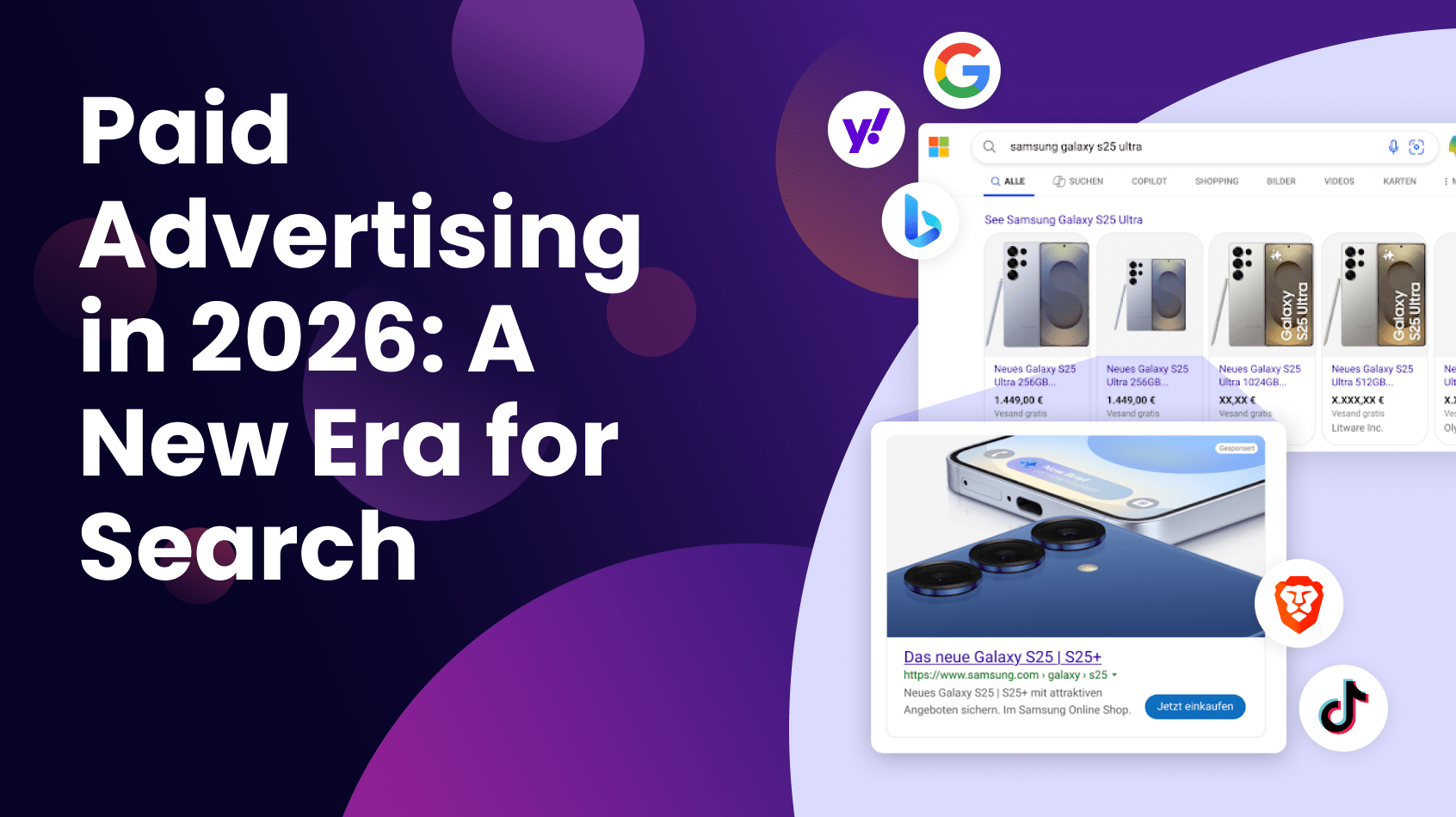
As 2026 begins, search behaviour is evolving in ways that are reshaping Paid Advertising. The marketers who succeed will be the ones who embrace change now. We break down what’s shifting and how Microsoft Advertising can become a strategic advantage.
Paid advertising is heading into 2026 carrying momentum, data, and some uncomfortable truths.
Campaigns are no longer competing in a neat, keyword-only world. Search behaviour is fragmenting, AI-driven discovery is accelerating, and the paths people take before converting are becoming longer, messier, and more unpredictable.
For marketers, this doesn’t mean starting over – but it does mean understanding what’s changing and why the old playbooks are starting to show cracks.
In this article, we explore where paid advertising is heading in 2026, how AI is reshaping search behaviour, and why platforms like Microsoft Advertising are becoming increasingly relevant in this new landscape.
How Search Behaviour Is Changing Going Into 2026
For years, paid search relied on a simple assumption: people search → ads appear → clicks happen.
That model still exists – but it’s no longer the whole story.
Search is fragmenting, not disappearing
Over the past year, traditional search behaviour has continued to splinter across multiple environments:
- Traditional search engines (Google, Bing, Yahoo)
- Social platforms used as search tools (TikTok, Instagram)
- AI chat interfaces that blend search, research, and decision-making
This shift is already measurable. AI chat usage grew by over 80% year-on-year, while traditional search market share has redistributed rather than consolidated around a single player.
The implication for advertisers is simple: People aren’t searching less – they’re searching differently.

AI and Search in 2026: Competing or Working Together?
One of the biggest misconceptions around AI is that it will “replace search”.
In reality, AI and search are becoming interdependent.
What the data tells us
Insights from Microsoft Advertising show that:
- Over 90% of Copilot journeys still start with a traditional search query
- Around 30% of users refine their query inside an AI experience
- Those refined queries are longer, more conversational, and more specific
In other words, AI doesn’t replace search intent – it extends and clarifies it.
Why this matters for paid advertising
As queries become longer and more nuanced, rigid keyword strategies struggle to keep up. Advertisers relying on exact matches or tightly controlled structures may miss opportunities that sit outside their original keyword lists.
This is where automation, intent signals, and broader matching strategies start to matter far more in 2026.
What This Means for Paid Ads Strategy in 2026
The evolution of search behaviour brings a shift in what paid platforms reward.
Paid ads in 2026 favour:
- Intent over exact keywords
- Themes over rigid structures
- Learning over immediate efficiency
- Flexibility over control
This doesn’t mean keywords no longer matter – it means they’re no longer enough on their own.
Campaigns increasingly need to:
- learn across multiple touchpoints
- interpret context
- adapt to conversational intent.
Why Microsoft Advertising Is a Useful Lens for These Changes
Microsoft Advertising isn’t the only platform experiencing these shifts – but it is one of the clearest places to see them happening.
Why marketers are paying more attention
Microsoft’s ecosystem brings together:
- Traditional search
- AI-driven Copilot experiences
- Audience and professional data
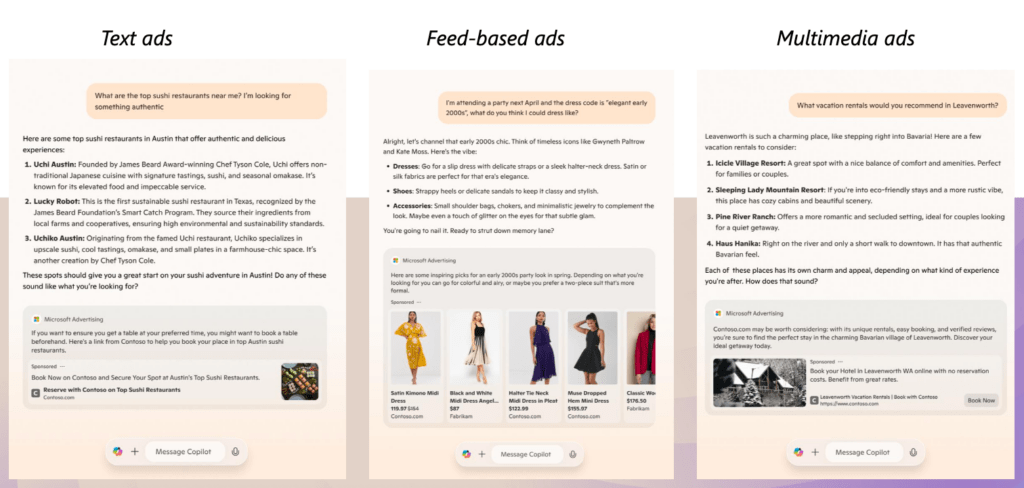
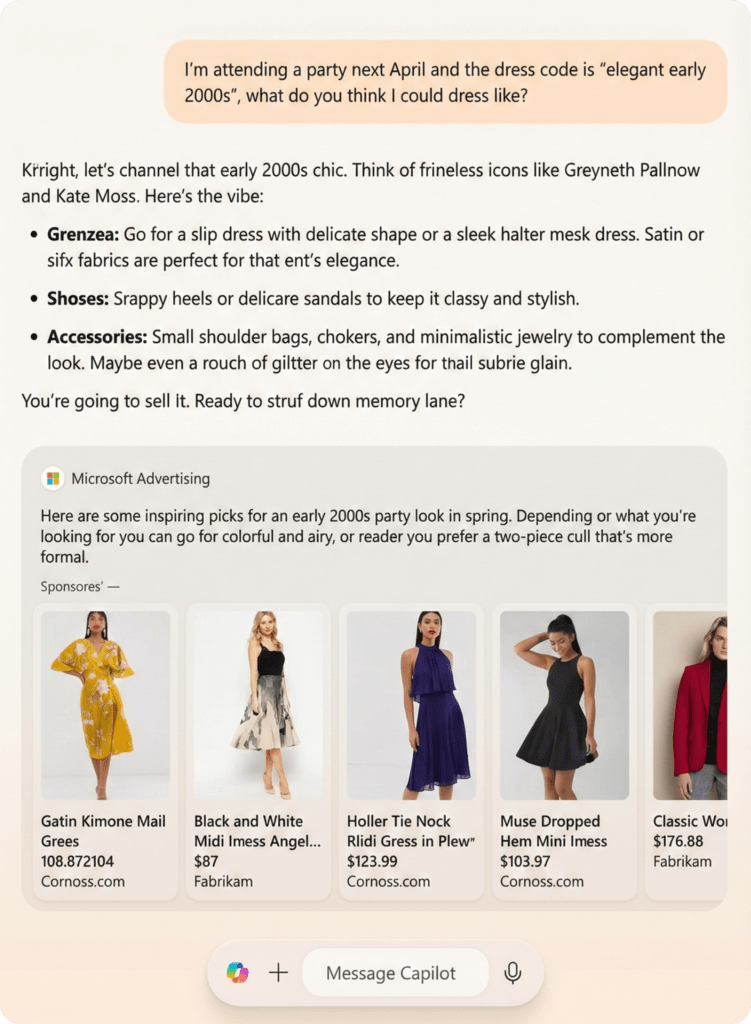
- A growing range of ad formats beyond text ads
Because Microsoft Advertising often has less historical data than more mature platforms, the impact of structure, budgets, and automation becomes visible more quickly – both good and bad.
This makes it a valuable testing and learning environment for advertisers adapting to how paid advertising works in 2026.
From Keywords to Intent: The Real Shift in 2026
One of the biggest takeaways for 2026 is the move away from a strict one-keyword-to-one-ad mentality.
What’s replacing it?
- Broader match strategies supported by intent signals
- Dynamic ad delivery across formats
- Modular creative assets that adapt to context
- Campaigns designed to learn, not just convert immediately
AI-driven platforms need data density and consistency to optimise effectively. Over-segmented campaigns with small budgets often struggle to generate the signals needed to improve performance.
Is Paid Advertising Getting Harder in 2026?
Yes – but not because platforms are broken.
Paid advertising is getting more competitive because:
- more advertisers are competing for the same attention
- user journeys are longer and less linear
- automation raises the bar for account structure and creative quality
The upside? Advertisers who adapt early gain a structural advantage.
Those who understand how AI, search, and discovery now interact are better positioned to test smarter, find incremental performance, and avoid diminishing returns.
Discover why ads in AI agents are the future of PPC in our article “AI to ROI: Why Ads in Copilot are the Next Big Breakthrough for PPC” – read it here!
Key Takeaways for Marketers Heading Into 2026
If you remember nothing else, remember this:
- Paid advertising in 2026 is not about resetting campaigns
- AI and search are working together, not against each other
- Intent signals matter more than exact keywords
- Platforms like Microsoft Advertising offer useful environments for learning and testing
- Flexibility beats rigidity in an AI-driven landscape
The rules haven’t disappeared – they’ve evolved.
Frequently Asked Questions
Is search still important for paid advertising in 2026?
Yes. Search remains a critical starting point for most user journeys, but it increasingly works alongside AI and conversational discovery rather than standing alone.
Does AI replace paid search advertising?
No. AI extends search behaviour rather than replacing it, creating longer and more nuanced journeys where paid ads can still play a role.
Why is Microsoft Advertising relevant in 2026?
Microsoft Advertising combines search, AI experiences, audience data, and new ad formats, making it a useful platform for understanding how paid advertising is evolving.
Should advertisers change their strategy immediately?
Not overnight. The smarter approach is gradual adaptation: testing broader strategies, allowing campaigns time to learn, and adjusting structure where performance stalls.
Want to get your paid campaigns off to the best start in 2026? Adzooma makes helpful recommendations and helps you to manage all of your campaigns and ad tools in one platform. Sign up free today!