

Are you leveraging all of the paid advertising features that you should be in 2026? Read on to discover if you’re missing some of the top performance changers from your PPC arsenal.
Paid advertising in 2026 isn’t about finding a brand-new channel. It’s about understanding how existing platforms are quietly doing more work for you, if you let them.
Across search and paid media, automation and AI are no longer “nice to have”. They’re shaping how ads are triggered, where they appear, and which audiences they reach. Yet many advertisers are still running campaigns as if these features don’t exist.
This article explores the paid ads features doing the heavy lifting in 2026 – using Microsoft Advertising as a practical example of how these changes are already playing out.
Paid Ads Are Changing – Even If Your Setup Hasn’t
One of the biggest shifts heading into 2026 isn’t visible in campaign dashboards at first glance.
It’s happening behind the scenes.
Across Google, Meta, and Microsoft, we’re seeing the same themes emerge:
- AI-driven ad delivery replacing manual optimisation
- Richer ad formats appearing beyond traditional search results
- Audience expansion based on intent signals, not just targeting rules
- Automation influencing performance earlier in the user journey
Microsoft Advertising is particularly useful as a case study here, because many of these features have rolled out quickly – making the impact easier to spot in real accounts.
Ads Are No Longer Confined to Search Results
Search ads still matter – but high-intent moments are no longer confined to search results, as AI-driven experiences reshape how users discover and decide.
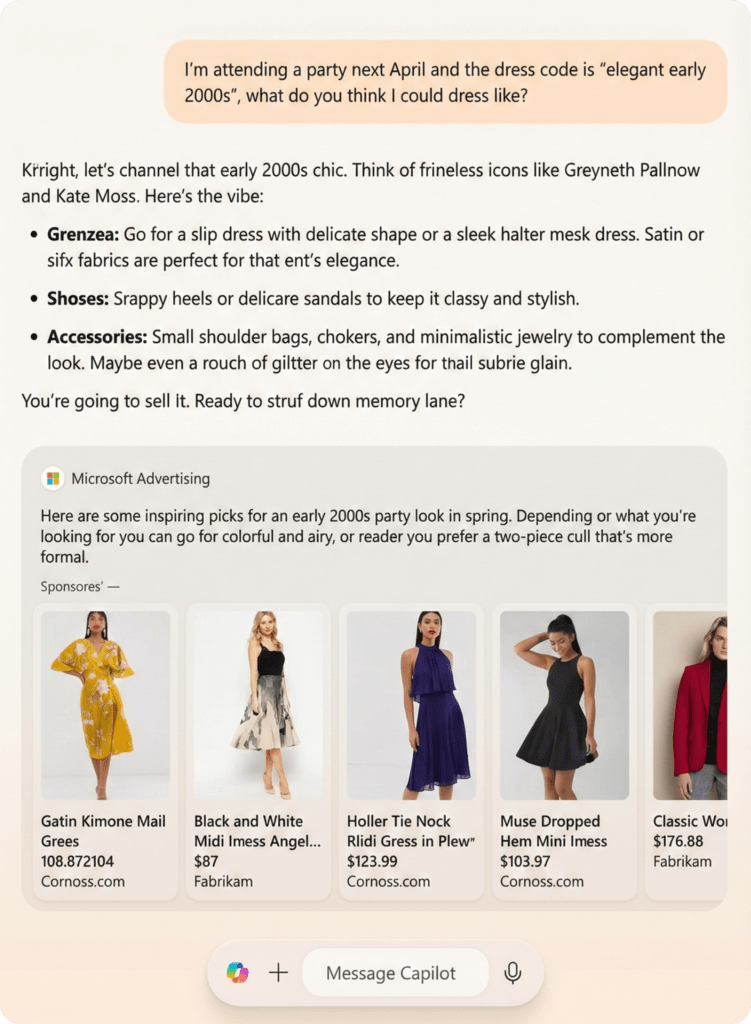
Microsoft’s Copilot experience blends search, research, and decision-making into a single flow. Importantly for advertisers:
- Sponsored ads appear alongside AI conversations
- Organic responses are never influenced by ads
- Ads can be tested without risking organic visibility
This separation allows advertisers to explore AI-driven placements without the fear of “corrupting” search results – a concern many marketers still have when testing new environments
Performance Max: More Than Just Automation
Performance Max (PMax) is widely discussed across paid media, but its real importance becomes clear when you look at how it shapes performance in 2026.
PMax campaigns are designed to:
- Serve ads across multiple formats and placements
- Learn from a wider range of signals
- Optimise toward outcomes, not individual clicks
According to Microsoft’s global data, Performance Max ads shown in Copilot delivered:
- 78% higher click-through rates
- 371% higher conversion rates
- Lower bounce rates than search-only formats
That combination points to something important: context matters just as much as keywords.
Impression-Based Remarketing: Reach Without the Click
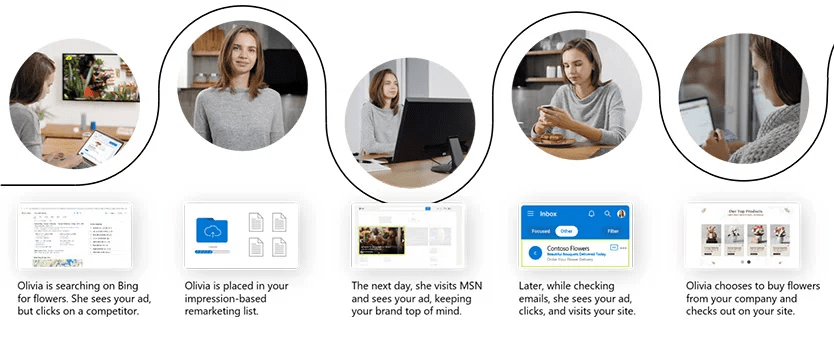
Traditional remarketing relies on clicks, tags, and site traffic, which can limit smaller advertisers or lower-volume sites – impression-based remarketing removes that constraint.
Impression-Based Remarketing allows advertisers to:
- Build audiences from users who saw an ad but didn’t click
- Use remarketing without relying on site tags
- Apply the feature across multiple campaign types
For 2026, this unlocks:
- Sequential messaging
- Smarter bid adjustments
- Prospecting strategies that don’t depend on high site traffic
It’s a subtle change – but one that significantly expands what remarketing can do.
AI-Generated Creative Is No Longer Optional
As paid platforms become more algorithmic, creative strategy has shifted from “the best ad wins” to “variation fuels learning.”
In 2026:
- Algorithms don’t want one perfect ad
- They want lots of good variations
Generative AI tools inside ad platforms now allow advertisers to:
- Create image and copy variations at scale
- Test messaging, formats, and visuals dynamically
- Refresh creative without rebuilding campaigns
Microsoft’s Copilot tools enable creative generation directly inside the advertising interface – reducing friction and encouraging more frequent testing
The result? Campaigns learn faster – and advertisers spend less time manually iterating.
Predictive and Professional Audience Targeting
Audience targeting in 2026 goes far beyond demographics. Instead of relying solely on predefined audience lists, paid platforms are increasingly using predictive, contextual, and professional signals to decide who sees your ads – often before a user ever clicks.
Microsoft Advertising now supports:
- Predictive targeting based on content and intent
- Impression-based audience signals
- LinkedIn profile-based targeting (job title, company size, industry)
While LinkedIn audiences are especially valuable for B2B advertisers, the broader lesson applies everywhere: Platforms are using more contextual and behavioural signals to decide who sees your ads.
Manual audience lists are no longer the ceiling.
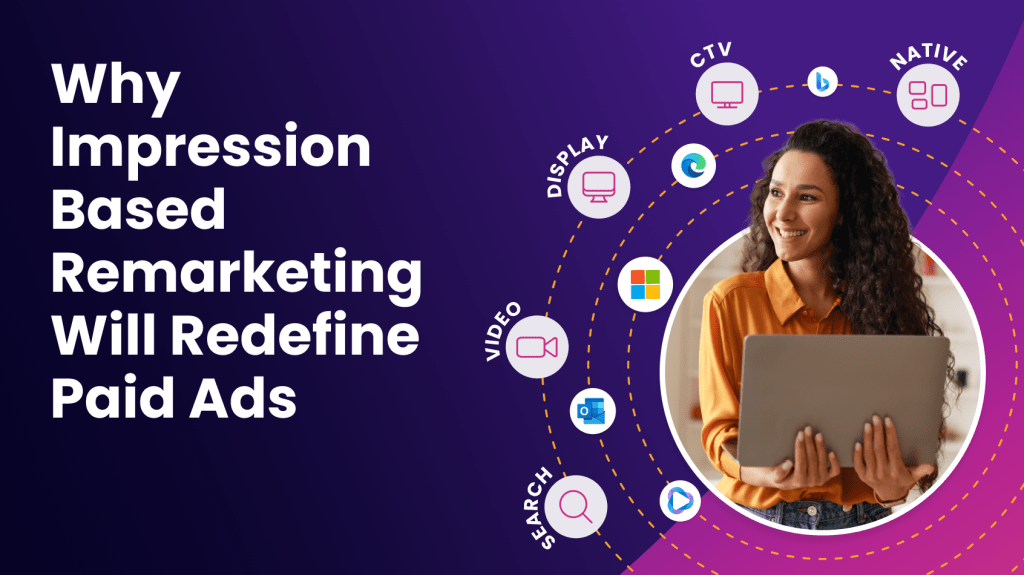
Discover how to get reach even without a click in our article “Why Impression Based Remarketing Will Redefine Paid Ads” – read it here!
Why These Features Matter More Than Ever in 2026
As costs rise and competition increases, the advertisers who win won’t necessarily be the ones with:
- the biggest budgets
- the most granular structures
- the most keywords
They’ll be the ones who:
- allow platforms to learn
- provide strong signals
- test features deliberately
- focus on intent, not control
The features doing the most work in 2026 are the ones that reduce friction between discovery and decision.
Key Takeaways for Marketers
If you’re reviewing your paid ads approach for 2026, remember:
- Automation is no longer optional – it’s foundational
- Ad placements now extend beyond traditional search
- Performance Max thrives on context and data density
- Impression-based remarketing unlocks new growth paths
- Creative variation fuels algorithmic learning
- Platforms like Microsoft Advertising show these shifts clearly – but the same applies across your paid media channels.
Common Questions
Are these features only relevant for Microsoft Advertising?
No. While Microsoft often rolls features out early, similar automation and AI-driven trends are visible across major paid platforms.
Do I need to use every new feature?
Not at all. The goal is intentional testing, not feature overload.
Is Performance Max suitable for smaller advertisers?
Yes – provided campaigns are structured to allow enough budget and data for learning.
Will automation replace human strategy?
No. Automation executes decisions faster – but strategy still determines what you test and why.
Final thought
Paid ads in 2026 don’t reward working harder. They reward working with the platforms as they evolve.
The features doing the most work are already there, the question is whether your campaigns are set up to benefit from them.
Want to get your paid campaigns off to the best start in 2026? Adzooma makes helpful recommendations and helps you to manage all of your campaigns and ad tools in one platform. Sign up free today!