

Running multiple Google Ads campaigns? Learn why treating them the same holds performance back – and how to prioritise budgets without rebuilding your account.
If you’re running multiple campaigns in Google Ads, it’s easy to fall into the habit of managing them all the same way. Similar budgets. Similar check-in schedules. Similar levels of attention across the board. On the surface, that feels organized — even fair.
However, here’s where things get interesting: treating every campaign equally is often exactly what causes performance to stall. Not because you’re doing anything wrong, but because not all campaigns play the same role or deserve the same level of investment.
The good news? Breaking through a plateau doesn’t require a full account overhaul, a complex restructure, or some advanced tactic you haven’t learned yet. Sometimes, it’s just about shifting how you prioritize what’s already there.
Why equal treatment holds performance back
Not every campaign in your account is built to do the same job.
In most cases, there’s a core group that quietly does the heavy lifting — driving the bulk of your conversions or revenue, capturing high-intent or branded traffic, and delivering consistent results week after week.
Then there’s the supporting cast. Campaigns focused on testing and discovery. Upper-funnel efforts targeting new audiences. Initiatives that are still gathering data and finding their footing.
When both groups are managed with the same budgets, expectations, and level of attention, resources get diluted. The high performers don’t get the room they need to scale, and the exploratory campaigns aren’t given clear guardrails. Over time, that balance — while seemingly fair — can hold the entire account back.
Step 1: Identify your core campaigns
You don’t need complex reporting to do this.
Ask yourself:
- Which campaigns consistently deliver conversions or revenue?
- Which have been stable for several weeks, not just a few days?
- Which campaigns would hurt most if they were paused tomorrow?
These are your core campaigns.
They should be the last to lose budget and the first to be reviewed when performance changes.
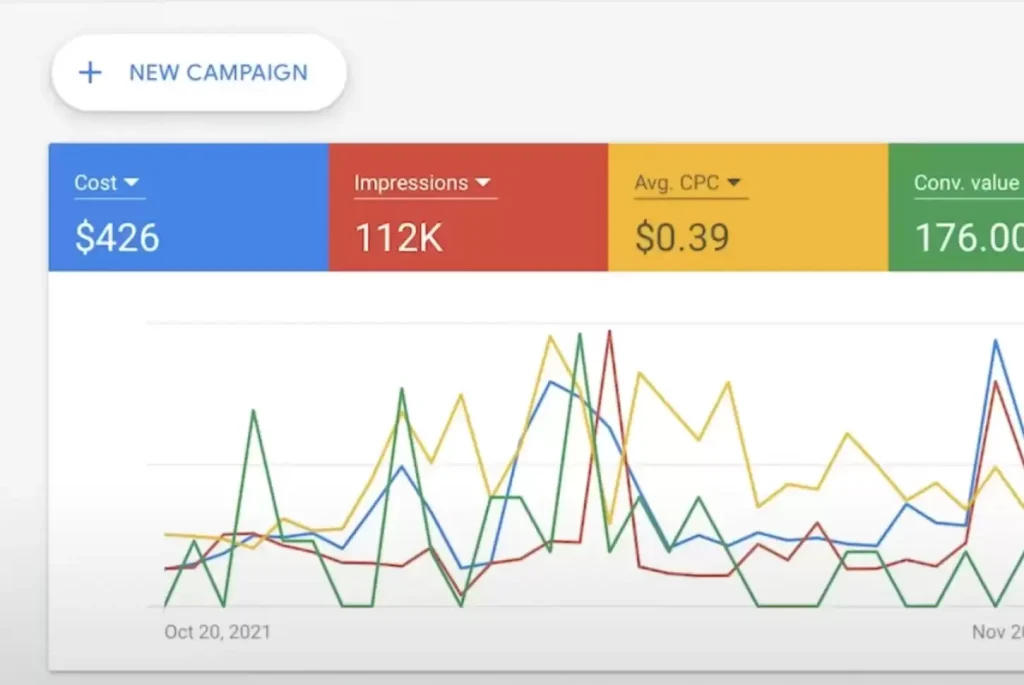
Step 2: Spot campaigns quietly wasting budget
This is where many advertisers hesitate – but it’s also where quick wins live.
Look for campaigns that:
- Spend regularly without producing results.
- Haven’t converted in a long time.
- Don’t support a clear goal (brand, testing, awareness).
You don’t need to switch these off immediately. Often, the safest optimisation is simply reducing spend and watching how performance responds.
Step 3: Make small, intentional budget changes
When it comes to budgets, dramatic moves tend to create more noise than progress. Sharp increases or sudden cuts can reset learning, distort performance data, and make it harder to see what’s actually working. Smaller, deliberate adjustments, on the other hand, give you clarity.
A smarter approach looks like this:
- Gradually increase budgets on campaigns that are already converting and showing stable performance.
- Trim spend on under-performers instead of switching them off immediately — give yourself room to observe trends.
- Avoid stacking multiple major changes at once, which makes it nearly impossible to isolate impact.
This way, you protect the learning phase while still steadily pushing performance in the right direction.

Step 4: Leave the “boring but stable” campaigns alone
One of the most common optimization mistakes is constantly tinkering with campaigns that are already doing exactly what they’re supposed to do. They may not be exciting. They may not show dramatic spikes. But they quietly deliver.
If a campaign is:
- Predictable
- Profitable
- Stable over time
It likely needs protection more than it needs improvement.
Not every campaign requires action. In fact, one of the most underrated skills in account management is knowing when to leave something alone. Stability is an asset — and sometimes the smartest move is simply to preserve it.

Struggling to get results with AI Max in Google Ads? Read Chris Nightingale’s guest post on how to unlock the power of AI Max and skyrocket your ROI!
How tools help without making things complicated
As your account grows, it gets harder to spot exactly where your attention will have the biggest impact.
Tools like Adzooma make this easier by:
- Identifying underperforming campaigns before they drag results down.
- Highlighting budget constraints on your strongest performers.
- Keeping optimization focused and manageable instead of overwhelming.
The aim isn’t to do more — it’s to do smarter, prioritizing the campaigns that truly move the needle.
Final Thought
Optimization isn’t about doing more work – it’s about doing the right work. Too often, advertisers assume that constant changes and tweaks are the path to better results. In reality, the biggest gains usually come from understanding the role each campaign plays and treating them differently based on their performance and purpose.
By focusing your attention where it matters most, protecting your stable performers, and making small, deliberate adjustments, you’ll see progress faster and with far less risk than you might expect. Smart prioritization beats busywork every time.
Want to simplify and optimise your Google Ads campaigns? Adzooma makes helpful recommendations and helps you to manage all of your campaigns and ad tools in one platform. Sign up free today!